The classic car market has transcended the realm of mere hobbyism to become a sophisticated asset class. As we look toward 2026, the landscape is defined by a remarkable intersection of nostalgia and rigorous financial valuation. The global classic car auction and online sales sectors grew by a staggering 10% in 2025, reaching a total market value of $4.8 billion. This momentum is not a fleeting trend; the market is projected to sustain an 8.7% annual growth rate through 2032. What is particularly fascinating is the demographic shift; a new generation of Gen X and Millennial collectors—often referred to as the "Gran Turismo" generation—is now driving demand, shifting the focus toward cars that offer a visceral driving experience alongside historical significance.
If you are looking for the absolute leader in the current market, the Chevrolet Corvette C2 currently holds the highest average resale value among high-volume 1960s icons, with an average sale price of approximately $125,151. It is followed in a near-dead heat by the Porsche 356 B, which commands an average of $124,965. However, value in this market is not merely a reflection of the badge; it is a complex calculation of documented provenance, original mechanical specifications (the coveted "matching-numbers" status), and rarity.
1. Chevrolet Corvette C2 (1963–1967): The Resale Champion
The second-generation Corvette, or the "Sting Ray," remains the undisputed titan of American collectibles. Its valuation is anchored by its radical departure from the C1—introducing independent rear suspension and the legendary "split-window" design of the 1963 coupe. In the 2025-2026 market, the C2 has demonstrated remarkable resilience against economic fluctuations.
While the average sale price sits at $125,151, the ceiling for this model is significantly higher. Collectors are currently paying premiums exceeding $200,000 for well-documented 1963 split-window coupes. The investment drivers here are specific and technical. The introduction of the first Z06 competition package and the ultra-rare L88 engine options (of which only 20 were produced in 1967) create a "halo effect" that pulls up the value of more common 327 and 427 cubic-inch variants. For 2026, the outlook remains bullish as the C2 continues to see high-volume activity across both legacy auction houses and digital platforms, which now account for $2.5 billion of the total market.
2. Porsche 356 B (1960–1963): The European Blue Chip
If the Corvette represents American muscle and bravado, the Porsche 356 B represents European precision and "Blue Chip" stability. The 356 B, produced between 1960 and 1963, is often viewed by investors as a "work of art" that happens to have an engine. With an average resale value of $124,965, it offers a level of mechanical simplicity that appeals to collectors weary of the complexities found in later 911 models.
The market for the 356 B is increasingly global, with significant demand surges coming from Asian and European collectors who value the "T5" and "T6" body styles for their purity of line. Pristine, Concours-level examples of the 356 B Super 90 or Carrera variants are frequently crossing the $500,000 threshold at auction. The primary driver for value in 2026 is originality. In a market flooded with replicas, a 356 B with a verified, matching-numbers drivetrain and its original color palette is a fortress for capital.
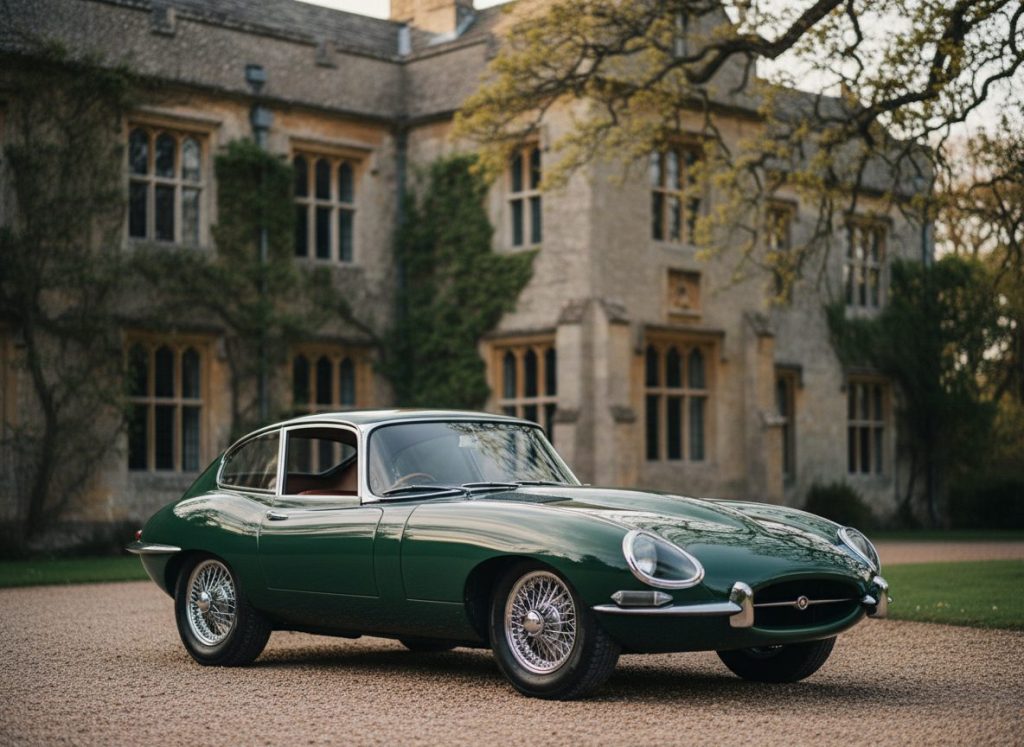
3. Jaguar E-Type Series 1 (1961–1968): The Aesthetic Benchmark
Enzo Ferrari famously called the Jaguar E-Type "the most beautiful car ever made," and the market in 2026 continues to agree with that sentiment. The Series 1, particularly those equipped with the 4.2-liter straight-six engine, remains the gold standard for British automotive investment. Currently, the average auction value stands at $109,156.
Investment in the E-Type is bifurcated. While the 2+2 variants offer a more accessible entry point, serious collectors focus exclusively on the Fixed Head Coupes (FHC) and Open Two Seaters (OTS/Roadsters). These early Series 1 models carry a significant premium due to their "covered" headlights and toggle-switch dashboards. Performance-wise, the 4.2-liter engine introduced in 1964 provided more torque and a more synchronized gearbox, making it the preferred choice for those who intend to participate in vintage rallies—a key driver of "utility value" in the classic car world.
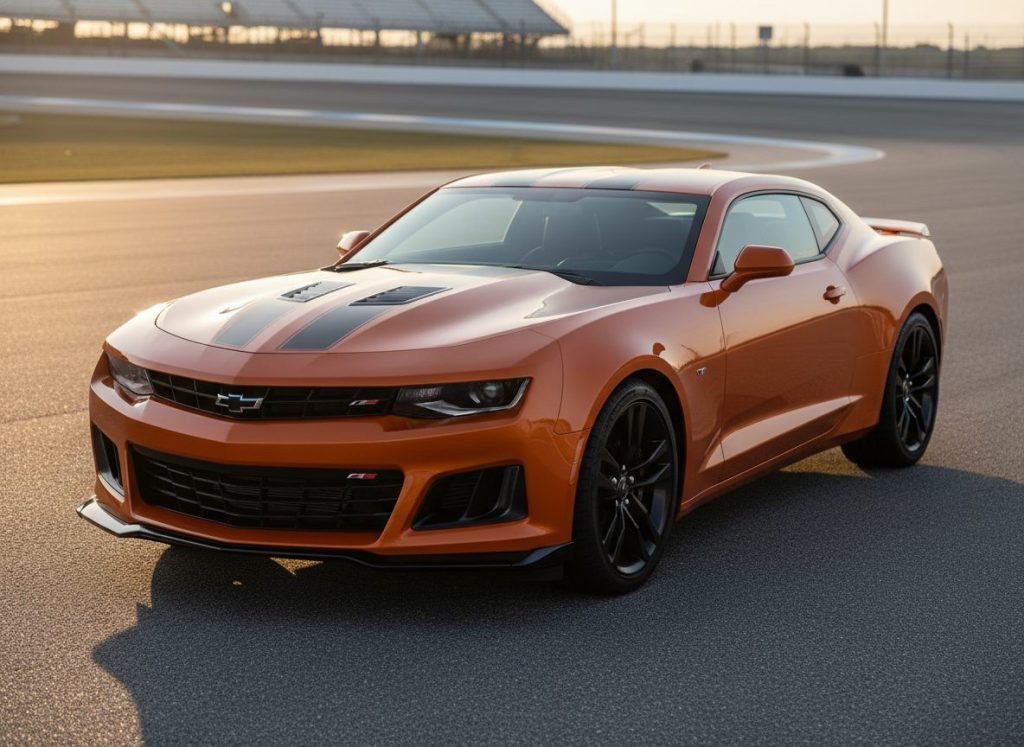
4. Chevrolet Camaro Z/28 (1967–1969): The Muscle Car Gold Standard
While the Corvette takes the top spot for pure value, the 1967–1969 Camaro Z/28 is widely considered the "Gold Standard" for market stability within the muscle car segment. With an average market value of $104,990, the Z/28 benefits from a dedicated and high-volume following that ensures liquidity—a crucial factor for any investor.
The 1969 Z/28 is particularly coveted due to its SCCA Trans-Am racing heritage and its high-revving 302 V8 engine, which was conservatively rated at 290 horsepower but often produced significantly more. Because only approximately 28,000 units were produced across the three-year span, the rarity factor is perfectly balanced with parts availability, making it a "safer" entry point for those new to high-end muscle collecting. Its narrower price range compared to the volatile Shelby Mustang market makes it an attractive defensive asset in a diversified portfolio.
5. Mercedes-Benz SL 'Pagoda' (1963–1971): The Refined Collectible
The W113 Mercedes-Benz SL, affectionately known as the "Pagoda" due to its distinctive concave hardtop, has seen a steady climb in valuation over the last five years. Designed by Paul Bracq, its timeless, understated elegance has made it a favorite among lifestyle collectors. The average resale value is currently $85,180, though the more powerful 280 SL variant frequently pushes closer to $100,000.
What is driving the Pagoda's value in 2026 is the "Restomod" trend. Unlike many other classics where modifications hurt the price, the W113 chassis is increasingly being preserved with modern internal components—discreet air conditioning, improved braking systems, and electronic fuel injection—while maintaining the original aesthetic. This "usability factor" has opened the car up to a younger demographic that demands 1960s style with 21st-century reliability.
| Model | 2026 Avg. Resale Value | Key Investment Driver |
|---|---|---|
| Chevrolet Corvette C2 | $125,151 | Split-window rarity & L88 engine legacy |
| Porsche 356 B | $124,965 | Mechanical purity & global demand |
| Jaguar E-Type Series 1 | $109,156 | Iconic aesthetic & Series 1 4.2L engine |
| Chevrolet Camaro Z/28 | $104,990 | Trans-Am racing heritage & market liquidity |
| Mercedes-Benz SL 'Pagoda' | $85,180 | Legendary build quality & restomod potential |
Investment Strategy: What Drives Value in 2026?
Success in the 2026 classic car market requires more than just an eye for beauty; it requires a data-driven approach to authentication. The most significant factor driving resale value remains documented provenance. In an era where online sales are growing by 12% annually, a comprehensive "paper trail"—including original window stickers, service logs, and ownership history—can add a 20-30% premium to the hammer price.
Pro Tip: The "Matching Numbers" Rule In the high-stakes world of 1960s classics, "matching numbers" is the most important phrase you can hear. This means the engine, transmission, and rear axle serial numbers match the vehicle's VIN and factory records. For a Corvette C2 or a Porsche 356 B, a non-matching engine can slash the resale value by as much as 40%. Always commission a professional inspection to verify these components before finalizing a purchase.
Furthermore, the rise of professional global logistics has transformed the market into a truly international arena. A collector in Tokyo can bid on a Camaro in Detroit with the confidence that specialized shipping services will preserve the vehicle's condition during transit. This global connectivity is a primary reason for the projected 8.7% annual growth rate, as it ensures that local economic downturns do not necessarily deflate the value of these portable assets.
FAQ
Is the classic car market a safe investment compared to stocks? While no asset is without risk, the classic car market has shown a low correlation with traditional stock market volatility. With an 8.7% projected annual growth through 2032, it serves as an excellent "passion asset" for diversification, provided you focus on models with high liquidity like the Camaro Z/28 or Corvette C2.
Does mileage matter as much for 1960s cars as it does for modern cars? Mileage is secondary to condition and originality in the vintage market. A 100,000-mile Porsche 356 B with its original engine and paint will often outvalue a 20,000-mile example that has been extensively modified or lacks documentation.
How has the shift to online auctions impacted prices? Online platforms have increased price transparency and market participation. By contributing $2.5 billion to the market value in 2025, these platforms have made it easier to track real-time valuations, reducing the "information asymmetry" that used to benefit only professional dealers.
Conclusion
The 1960s represented a golden age of automotive design and mechanical innovation, and the 2026 market reflects the enduring value of that era. Whether you are drawn to the aggressive lines of the Chevrolet Corvette C2 or the refined elegance of the Mercedes-Benz Pagoda, these vehicles offer more than just a nostalgic drive—they are proven financial instruments. As the market continues its steady climb toward a $4.8 billion valuation, the key to a successful investment lies in the details: provenance, originality, and a keen understanding of shifting collector demographics.
Are you looking to diversify your portfolio with a high-value classic? Consult with a certified automotive appraiser today to begin your journey into the lucrative world of 1960s collectibles.