Quick Facts
- The Appointee: Jared Isaacman, a 41-year-old billionaire entrepreneur, founder of Shift4, and seasoned pilot with over 8,000 flight hours.
- The Role: 15th NASA Administrator and the youngest individual to ever lead the agency.
- The Controversy: Isaacman’s long-standing professional and personal relationship with Elon Musk and SpaceX, including funding and commanding the Inspiration4 and Polaris Dawn missions.
- The Mandate: A 180-day deadline (by June 16, 2026) to overhaul NASA’s acquisition processes, shifting from "cost-plus" to fixed-price contracts.
- Confirmation Status: Advanced by the Senate Commerce, Science, and Transportation Committee with a 19-9 bipartisan vote.
The appointment of Jared Isaacman as the 15th NASA Administrator marks a tectonic shift in American space policy. For the first time, a civilian astronaut who has actually commanded private orbital missions is taking the helm of the world's premier space agency. While his supporters see a visionary leader capable of modernizing a sluggish bureaucracy, critics point to a potential "fox guarding the henhouse" scenario due to his deep ties with SpaceX. The central question remains: Is Isaacman the catalyst NASA needs to reach Mars, or does his appointment create an unmanageable conflict of interest that favors his former business partners?
Who is Jared Isaacman and what is his role at NASA? Jared Isaacman is the 15th NASA Administrator, recognized as a highly successful entrepreneur and the first person to command an all-civilian orbital mission, Inspiration4. At NASA, he is tasked with leading the agency into a new era of commercial exploration, specifically overseeing the 2026 acquisition reforms and the "Project Athena" restructuring of deep-space programs.
The Pilot at the Helm: Qualifications and Vision
Jared Isaacman does not fit the traditional mold of a NASA Administrator. Historically, the role has been occupied by former politicians, career bureaucrats, or military top brass. Isaacman, by contrast, is a high-performance jet pilot and a billionaire who built a payment-processing empire from his parents' basement. This "disruptor" pedigree is exactly what the current administration is betting on to accelerate the Artemis program.
His vision for NASA is unapologetically ambitious: a permanent human presence on the Moon and the first American footprints on Mars. Isaacman’s experience in the cockpit of the Polaris Dawn mission—where he conducted the first private spacewalk—gives him a unique perspective on hardware reliability and operational efficiency that few of his predecessors possessed. He views NASA not just as a research institution, but as a strategic engine for the "new space" economy.
The Conflict Controversy: Ties to Elon Musk and SpaceX
The most significant hurdle during Isaacman’s confirmation was his relationship with SpaceX founder Elon Musk. Isaacman has been one of SpaceX’s most high-profile customers, reportedly spending hundreds of millions of dollars on the Polaris program. This proximity has sparked intense debate over whether he can remain impartial when awarding multi-billion dollar contracts.
Despite these concerns, the Senate Commerce, Science, and Transportation Committee advanced his nomination with a bipartisan 19-9 vote. Proponents argue that Isaacman’s "all business" approach is a defense against bias, not a cause of it. However, the optics remain challenging.
What are the specific conflict of interest concerns? Critics worry that Isaacman’s history as a SpaceX client and his personal rapport with Elon Musk could lead to preferential treatment in NASA contract awards. There is a fear that the agency might become overly reliant on a single provider, potentially stifling competition from other commercial entities like Blue Origin or Boeing.
The scale of the "SpaceX factor" is hard to ignore. For example, SpaceX recently secured a $714 million Pentagon contract to launch five military missions under the National Security Space Launch program. When an administrator has personal history with a company that is already a dominant force in both civil and military space sectors, the demand for transparency becomes paramount.
Project Athena: Accelerate, Fix, or Delete
To address the perceived inefficiencies at NASA, Isaacman has introduced "Project Athena," a strategic blueprint designed to evaluate every major program under three specific lenses:
ACCELERATE Isaacman is pushing for a faster development cycle for commercial lunar landers and Mars nuclear propulsion systems. He believes that by leveraging private sector agility, NASA can shave years off the current Mars timeline.
FIX The Jet Propulsion Laboratory (JPL) is a crown jewel of NASA, but its contract structure has been criticized for being overly rigid. Project Athena aims to modernize these agreements to allow for more flexibility and faster hardware iterations.
DELETE Perhaps the most controversial aspect of Isaacman's plan is the proposed termination of the Space Launch System (SLS) after the Artemis III or IV missions. The SLS has been a political mainstay, providing thousands of jobs across Alabama, Louisiana, and Utah, but its high cost makes it a prime target for deletion in a "commercial-first" NASA.
The 2026 Acquisition Reform: A Paradigm Shift
Underpinning Isaacman’s leadership is the 2026 acquisition reform. This mandate requires NASA to overhaul its entire contracting process within a strict 180-day window, with a deadline of June 16, 2026. This isn't just a minor tweak; it's a fundamental change in how the government buys space services.
What is the 2026 Acquisition Reform? It is a legislative mandate requiring NASA to shift its procurement strategy toward 'Other Transaction Authority' (OTA) and fixed-price agreements. This moves the agency away from 'cost-plus' contracts—where the government covers all of a contractor’s costs plus a profit margin—placing the financial risk of delays and overruns on the private companies instead of the taxpayer.
This reform is designed to foster a more competitive environment. By using fixed-price contracts, NASA essentially says: "We will pay you $X to deliver this service; how you do it and how much you profit is up to your efficiency."
Economic Reality: The SLS Dilemma
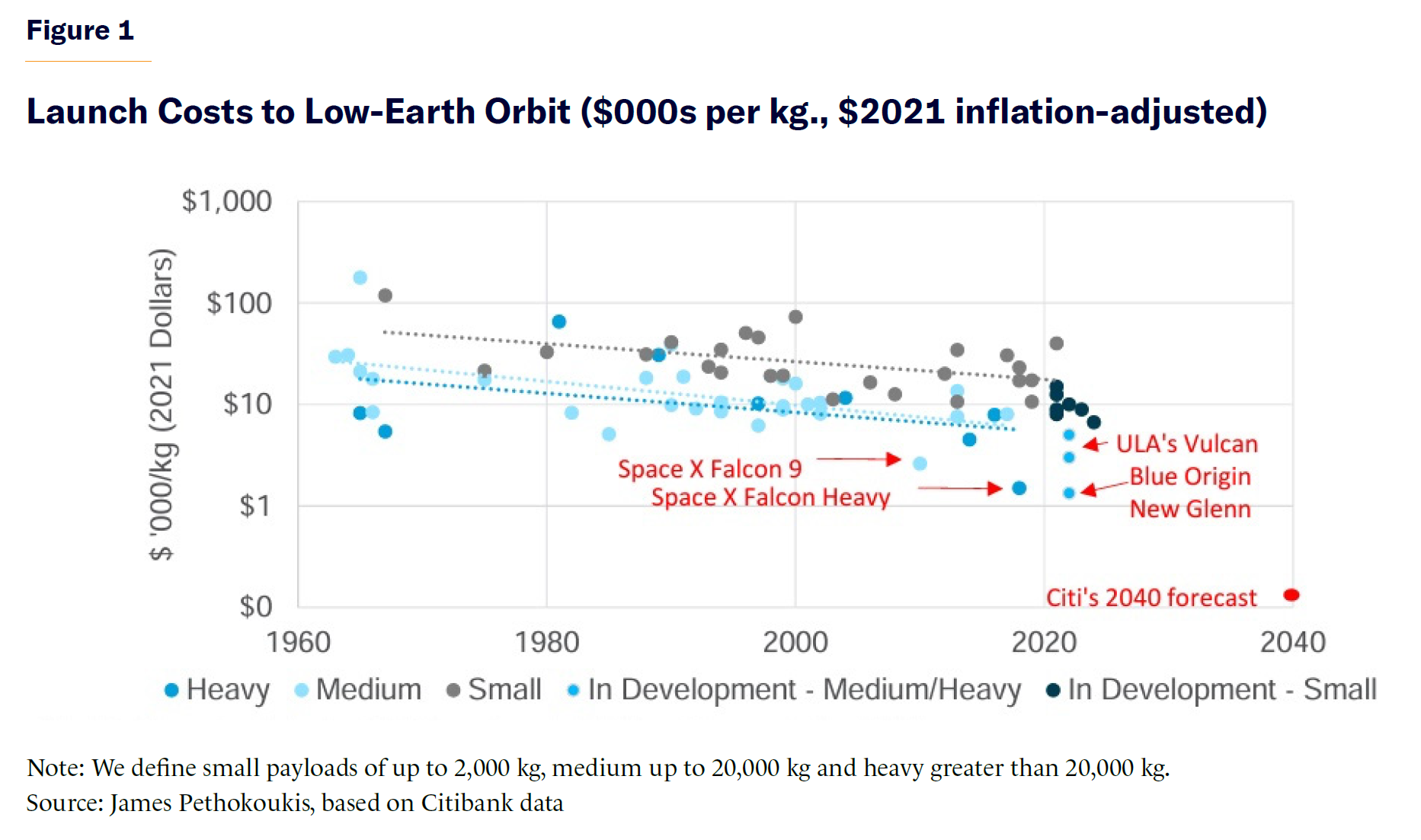
The debate over Isaacman’s ties to SpaceX is often framed by the sheer economic disparity between traditional NASA programs and modern commercial alternatives. The Space Launch System (SLS) is a marvel of engineering, but it comes with a staggering price tag.
| Feature | Space Launch System (SLS) | Commercial Alternatives (e.g., Starship) |
|---|---|---|
| Contract Type | Traditional Cost-Plus | Fixed-Price / Commercial Service |
| Cost Per Launch | ~$4.1 Billion | Estimated $100M - $500M (Targeting <$10M) |
| Reusability | None (Expendable) | Fully Reusable |
| Development Model | Distributed (State-by-state) | Integrated (Private Facility) |
The political challenge is immense. Unwinding the SLS program means taking on the "Iron Triangle" of Congress, legacy aerospace contractors, and local constituencies. However, Isaacman argues that the $4.1 billion spent on a single SLS launch could fund several years of commercial lunar logistics.
Future of Public-Private Partnerships (PPP)
Isaacman’s tenure will likely be defined by how he manages Public-Private Partnerships (PPPs). These aren't just about rockets; they extend to the very infrastructure of space. One key area is the Space Communications and Navigation (SCaN) program.
NASA is currently transitioning to an "Earth Relay" capability. Instead of owning and operating every satellite dish and relay station, the agency plans to purchase communication services from commercial providers. This shift, expected to be fully realized between 2025 and 2040, allows NASA to share the investment and the risk with companies that are already building massive orbital constellations.
Regulatory Gaps and Space Sustainability
As the commercial sector expands, so do the risks. One of the major challenges Isaacman faces is the lack of robust regulation regarding orbital debris and spectrum allocation. With thousands of new satellites launching every year, the risk of "Kessler Syndrome"—a chain reaction of collisions—is higher than ever.
Isaacman must balance the drive for rapid innovation with national security and safety standards. He has signaled a willingness to work with the FAA and the FCC to streamline licensing while maintaining strict safety protocols. The goal is to ensure that the U.S. remains the "flag of choice" for the global space industry by offering a stable, predictable, and safe regulatory environment.
FAQ
Q: Will Jared Isaacman have to recuse himself from SpaceX-related decisions? A: Isaacman has undergone a rigorous ethics review. While he may not have to recuse himself from all decisions, specific contract awards involving SpaceX will be subject to heightened oversight by NASA’s General Counsel to ensure there is no direct personal gain.
Q: Is the Space Launch System (SLS) definitely being canceled? A: Not yet. While the "Project Athena" framework suggests a pivot away from SLS after Artemis IV, any final decision would require Congressional approval, as the program is currently protected by legislative mandates.
Q: How does the 2026 reform affect smaller space startups? A: The shift to fixed-price and OTA contracts is generally seen as a benefit for startups. It lowers the barrier to entry by focusing on performance and results rather than the ability to navigate complex "cost-plus" accounting requirements.
The era of Jared Isaacman at NASA is officially underway. Whether he is viewed as a SpaceX surrogate or a visionary reformer, one thing is certain: the status quo at NASA is over. By June 2026, the agency will look vastly different—leaner, more commercial, and arguably more focused on the deep-space horizon than ever before.