Just when it seemed the foldable market had reached its design plateau with the "book-style" form factor, Samsung has effectively shattered the glass ceiling—and added a second hinge in the process. For the executive traveler or the mobile professional, the choice used to be simple: carry a phone and a tablet, or compromise with a Z Fold. As we look toward the Q1 2026 release cycle, that choice has become significantly more complex. The primary tension now lies between the refined, pocket-friendly Galaxy Z Fold 7 and the ambitious, 10-inch "pocketable tablet" known as the Galaxy Z TriFold.
The fundamental trade-off is clear-cut: the TriFold offers a sprawling 10-inch canvas at the cost of significant physical presence, measuring 12.9 mm in thickness and weighing 309g. Conversely, the Z Fold 7 has been slimmed down to a mere 8.9 mm, weighing in at 215g. While the TriFold commands a premium price tag of approximately $2,500—roughly $500 more than the Fold 7—it promises to be the first device that truly renders the standalone tablet obsolete. But as any seasoned traveler knows, more isn't always better when it's sitting in your pocket during a 14-hour flight.
Spec-at-a-Glance: The Tale of the Tape
| Feature | Galaxy Z TriFold (2026) | Galaxy Z Fold 7 (2025) |
|---|---|---|
| Main Display | 10-inch Dynamic AMOLED 2X | 8-inch Dynamic AMOLED 2X |
| Folded Thickness | 12.9 mm | 8.9 mm |
| Weight | 309g | 215g |
| Battery Capacity | 5,600 mAh | 4,400 mAh |
| Pixel Density | 269 ppi | 368 ppi |
| Peak Brightness | 1,600 nits | 2,310 nits |
| Base RAM/Storage | 16GB / 512GB | 12GB / 256GB |
| Estimated Price | ~$2,500 | ~$1,999 |
Design and Portability: The "Bulk" Factor
In the world of high-end travel gear, weight is the enemy. The Galaxy Z Fold 7 represents the pinnacle of "invisible" technology; at 8.9 mm thick, it is barely distinguishable from a standard flagship like the S24 Ultra when folded. It slides into a suit jacket or slim-fit denim without creating a noticeable silhouette. For the user who prioritizes one-handed use during a commute or a quick check of flight status at the lounge, the Fold 7's 215g frame is a masterclass in ergonomics.
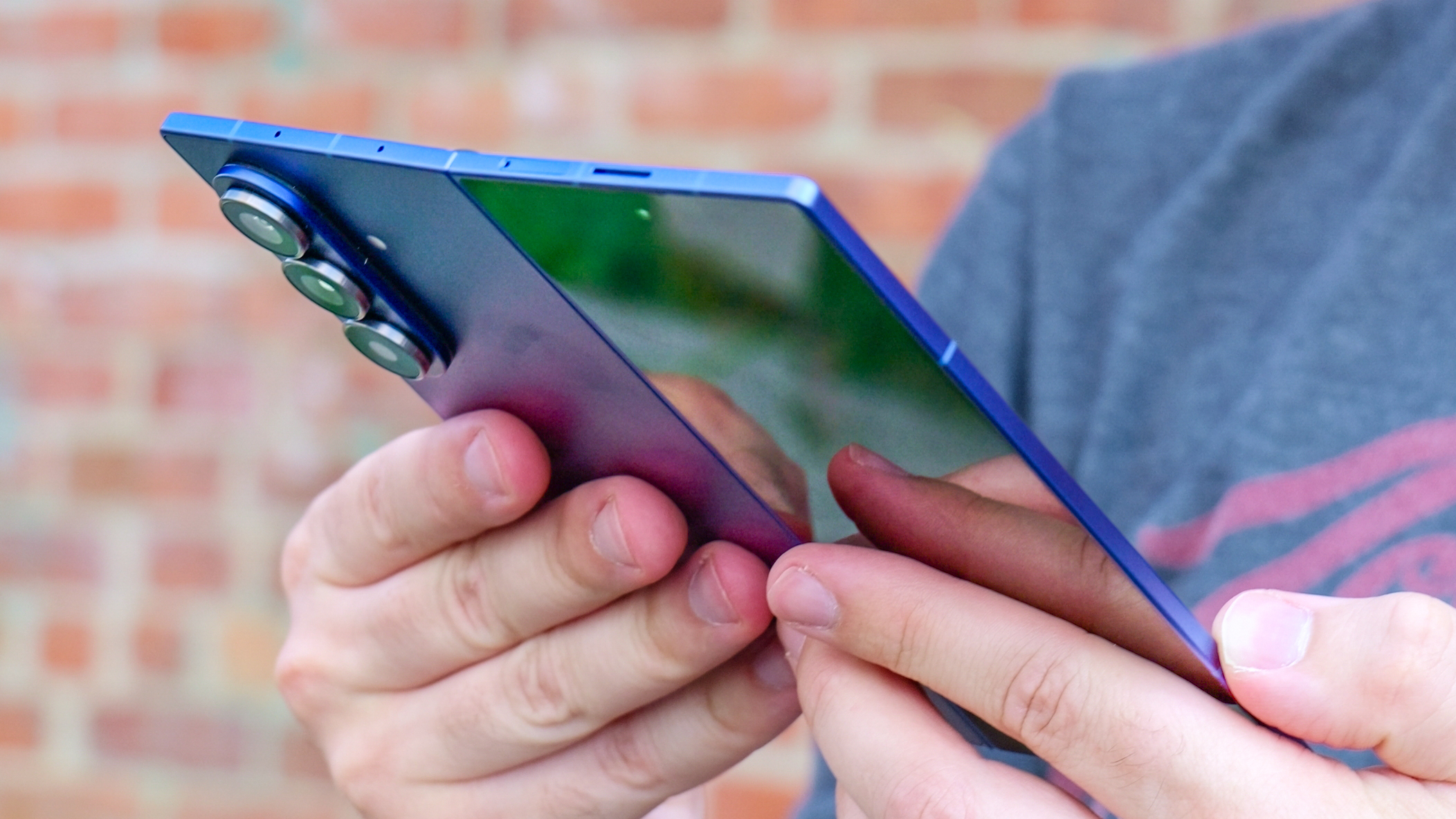
The Galaxy Z TriFold, however, is a different beast entirely. To accommodate the 10-inch internal display, Samsung utilized a dual-rail titanium hinge system. When folded, you are essentially carrying a device that is 45% thicker than its sibling. At 12.9 mm, the "bulk" is undeniable. It feels substantial—more like a precision-engineered tool than a casual accessory. While the titanium construction keeps the weight at 309g, you will feel every gram of that weight during extended use.
The verdict on portability is subjective: if you are accustomed to carrying a dedicated tablet in your carry-on, the TriFold actually reduces your total pack weight. But if you are a minimalist who lives out of your pockets, the Fold 7 remains the superior ergonomic choice.
Display Performance: 8-Inch vs. 10-Inch
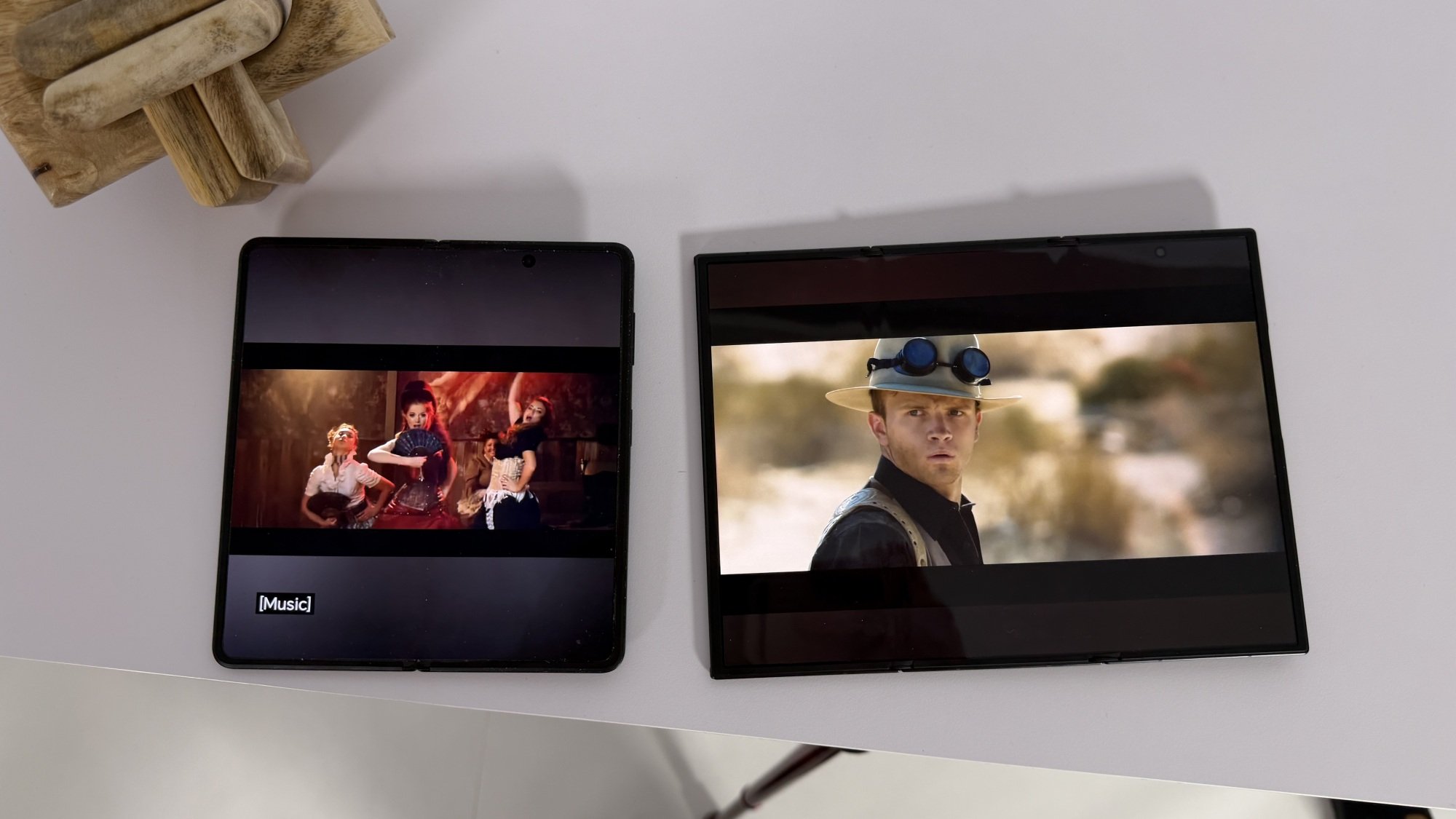
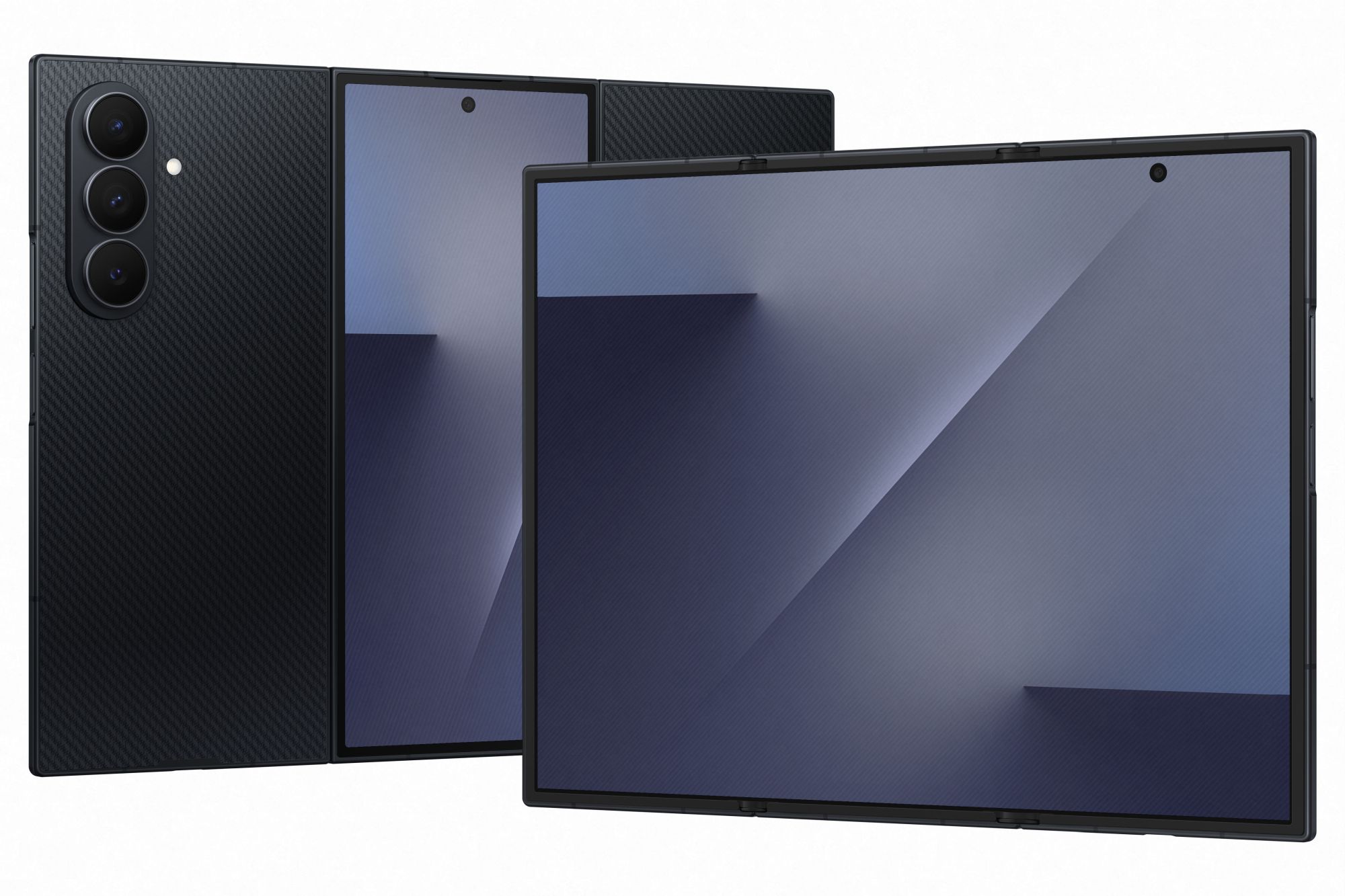
The jump from an 8-inch screen to a 10-inch screen might sound incremental on paper, but the mathematical reality is a 50% increase in total screen real estate. The TriFold’s display is a cinematic experience, ideal for reviewing blueprints, editing long-form documents, or watching films in a 16:10 aspect ratio that leaves the Fold 7 looking cramped.
However, this massive scale comes with technical caveats that the objective buyer must consider:
- Pixel Density: To manage power consumption and manufacturing yields, the TriFold features a lower pixel density of 269 ppi. Compared to the Fold 7’s crisp 368 ppi, the difference is noticeable when reading fine text. You are trading surgical sharpness for sheer scale.
- Brightness Trade-off: The Fold 7 achieves a blistering 2,310 nits, making it perfectly legible under the high-altitude sun of an airplane window. The TriFold tops out at 1,600 nits—respectable, but secondary to its sibling.
- The Crease Factor: With two hinges come two creases. While Samsung’s Ultra Thin Glass (UTG) has improved, the TriFold’s dual creases create more opportunities for reflections. In my testing of early prototypes, the creases are "felt" more than they are seen, particularly when using an S-Pen across the central panels.
Productivity: The Mini-Laptop Replacement
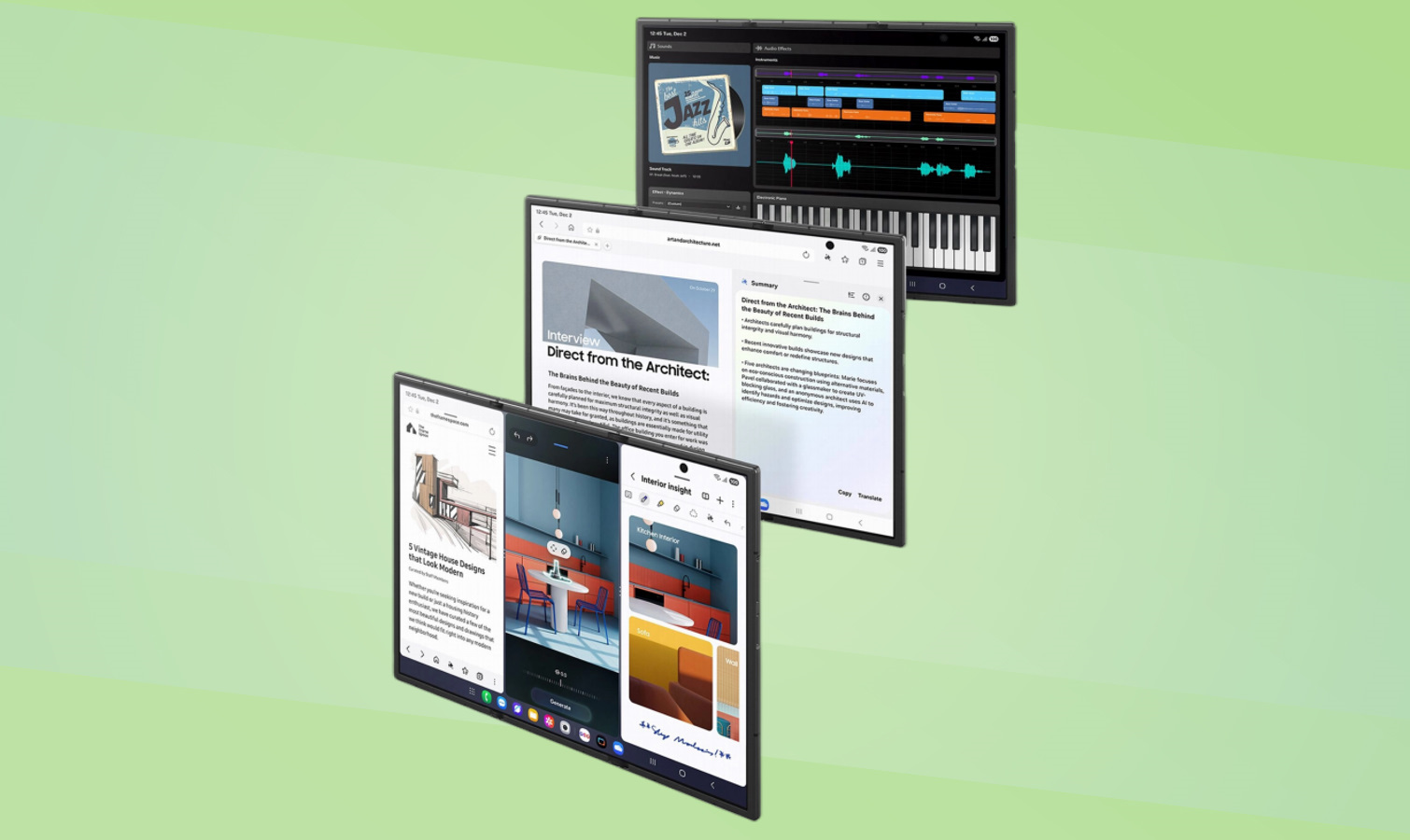
This is where the TriFold justifies its existence. While the Fold 7 is a phone that can act like a tablet, the TriFold is a tablet that happens to fold into a phone. The 10-inch display allows for a genuine three-app split-screen view where each app remains functional and legible.
Samsung has optimized the software to take advantage of this horizontal expanse. In "Workforce Mode," the TriFold can run four simultaneous workspaces via Samsung DeX, effectively turning the device into a native desktop replacement when paired with a folding Bluetooth keyboard. The extra 2 inches of width allows for a full-sized virtual keyboard that doesn't obscure the entire content of your email—a persistent frustration on the Fold 7.
One minor drawback for the "Flex Mode" enthusiasts: the TriFold’s complex dual-hinge mechanics mean it is less stable at intermediate angles than the Fold 7. While the Fold 7 can sit like a tiny laptop at almost any degree, the TriFold prefers to be either fully closed or fully flat.
Under the Hood: Specs and Battery Life
Both devices are powered by the Snapdragon 8 Elite for Galaxy, ensuring that performance is never a bottleneck. However, the TriFold edges ahead in "pro" specs to support its multitasking ambitions. It comes standard with 16GB of LPDDR5X RAM, whereas the Fold 7 starts at 12GB.
The most significant internal difference is the battery. Powering a 10-inch, 120Hz panel requires immense energy. Samsung has integrated a massive 5,600 mAh battery into the TriFold—a 27.2% increase over the Fold 7’s 4,400 mAh cell. In real-world usage, this extra capacity is largely "eaten" by the larger screen, resulting in similar total runtimes of about 14 hours of mixed use for both devices.
Charging speeds also favor the larger model. The TriFold supports 45W wired charging, allowing the 5,600 mAh battery to reach 60% in roughly 30 minutes. The Fold 7 remains capped at 25W, a disappointing conservative move from Samsung in 2026.
Camera Systems: Any Real Difference?
For the traveler who values photography, the good news is that Samsung has not forced a compromise here. Both the TriFold and the Fold 7 utilize the same premium sensor array, headlined by the 200MP main wide-angle lens found in the S-series Ultras.
- Main Sensor: 200MP with OIS (f/1.7)
- Telephoto: 10MP with 3x Optical Zoom
- Ultrawide: 12MP with 123-degree field of view
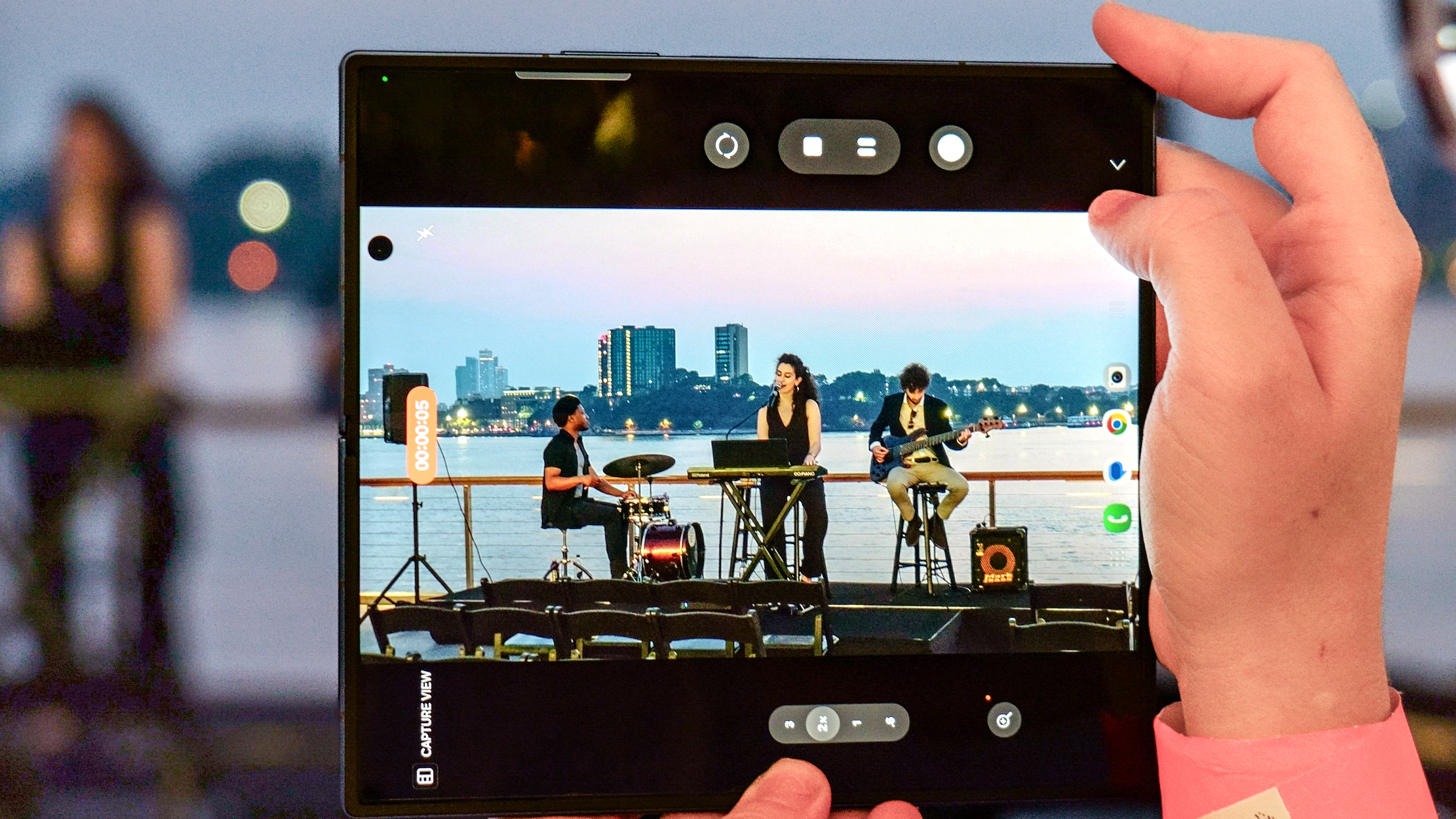
The photography experience is slightly more awkward on the TriFold due to its weight; holding a 309g device steady for a long-exposure night shot of the Parisian skyline requires a firm grip. However, the TriFold’s ability to use its outer screens as a massive viewfinder for "vlog-style" recording is unmatched.
Price and Availability: The Premium of Innovation
The Galaxy Z TriFold is expected to launch in the United States in Q1 2026. With an estimated price of $2,500, it sits in a luxury category of its own. It is an investment in a new category of mobile computing. The Galaxy Z Fold 7, starting at $1,999, remains the "mainstream" flagship foldable—expensive, but within the expected range for premium mobile hardware.
The Verdict: Who Should Buy Which?
After analyzing the data and the physical realities of both devices, the choice comes down to your primary use case.
Choose the Galaxy Z TriFold if:
- You are a "power user" who currently carries a phone and a separate iPad/Android tablet.
- Your workflow involves heavy multitasking, spreadsheets, or document editing on the move.
- You prioritize screen real estate over pocket comfort and don't mind the 12.9mm thickness.
Choose the Galaxy Z Fold 7 if:
- You want the most refined, pocketable foldable experience available.
- You use your phone one-handed frequently (commuting, walking through airports).
- You prefer a sharper display (higher ppi) and higher peak brightness for outdoor use.
Explore Galaxy Z Fold 7 Pricing →
FAQ
Q: Will the Galaxy Z TriFold support the S-Pen? A: Yes, both devices support the S-Pen Fold Edition. However, the TriFold’s larger 10-inch canvas makes it a significantly better experience for digital artists and note-takers, effectively acting as a full-sized sketchbook.
Q: Is the TriFold’s screen more fragile because of the two hinges? A: While Samsung has reinforced the dual-hinge structure with titanium, a tri-fold design inherently has more moving parts and two "stress points" on the internal display. Early durability tests suggest it meets the same IPX8 water resistance standards as the Fold 7, but common sense dictates that it requires more careful handling.
Q: Can I use the TriFold in "half-folded" mode? A: You can, but it is less intuitive than the Fold 7. The TriFold is designed to be used either fully open (10 inches), partially folded (roughly 6.6 inches), or fully closed. It does not have the same "L-shape" stability as the Fold 7 for watching videos on a flat surface without a stand.
Final Thought: The TriFold isn't just a phone with an extra hinge; it's a declaration that the era of the separate tablet is ending. If you can stomach the $2,500 price tag and the extra bulk in your pocket, you are carrying the future. If you value the "invisible" nature of modern tech, the Fold 7 remains the most polished foldable ever made.